

What the future of housing development will look like in Launceston
Updated a month ago by Joe Colbrook
Launceston has used up all of its ready-to-develop land, according to the peak planning body, so what happens now and where can we build new homes?
President of the Planning Institute of Australia's (PIA) Tasmania division Michael Purves said the style of housing being built had largely been consistent over the years, which was now a problem.
The council's Launceston Housing Strategy 2025-2040 puts the most common household size at two people, followed by single-person households.
Together, they account for 65.8 per cent of all households in Launceston yet 80.2 per cent of current homes are detached houses.
"What we're not seeing is the change in housing form that we really need to start getting to deal with the changing demographics we have these days," Mr Purves said.
Suburbs not the 'single solution'
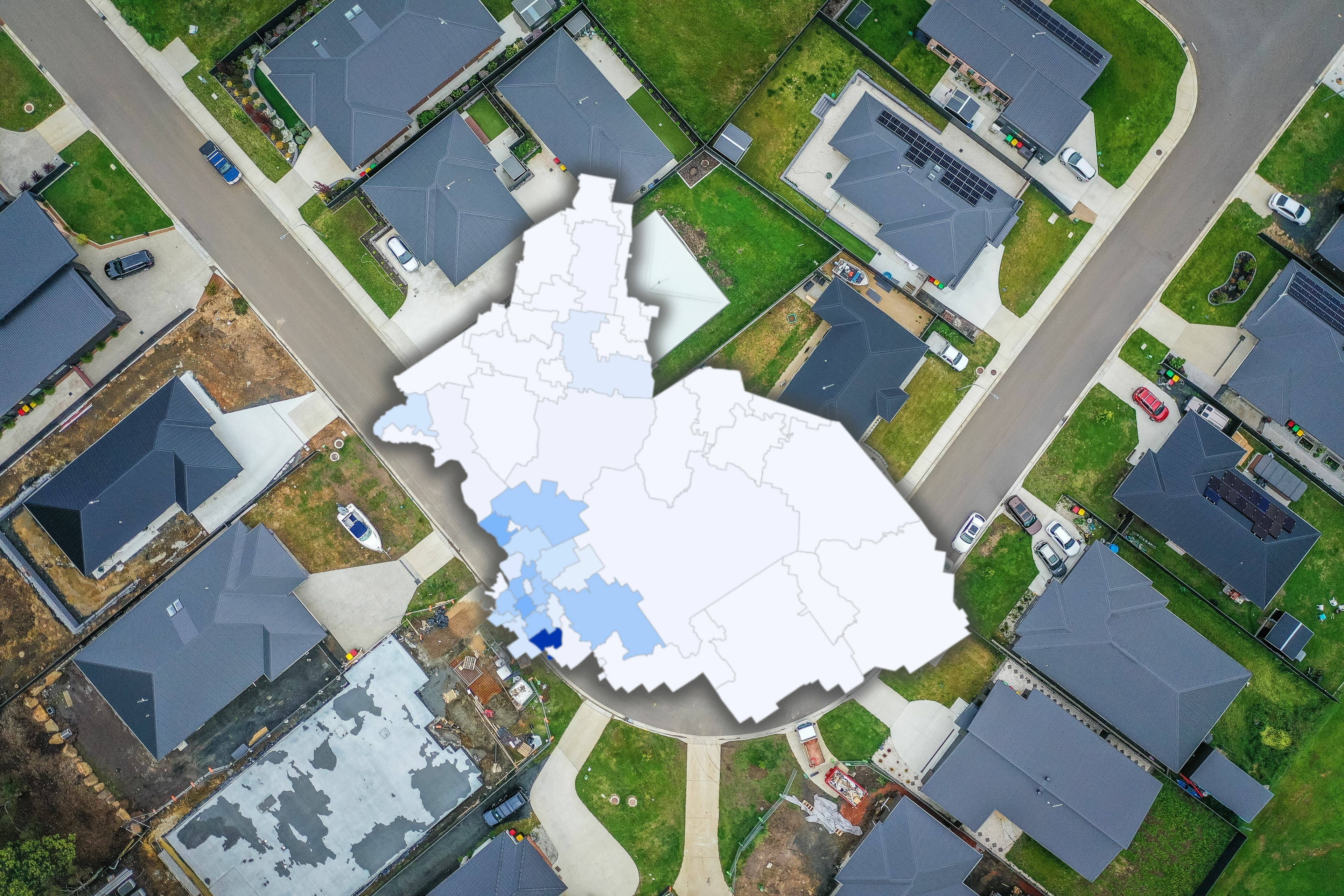
Since the 2020-21 financial year, the City of Launceston council has granted planning approval to 1425 new homes.
Most of these were in Youngtown, where the housing estate around Enterprize Drive has been steadily built up since 2020, followed by South Launceston and Newnham.
Mr Purves said it was well past time to look at alternative options to suburban sprawl.
"It's no longer the single solution where you've got your suburban house or your suburban units," he said.
"It's now an 'and' proposition. We need the suburban housing model to continue, but we also need to start to get more of alternative housing forms such as townhouses or apartments."
Mr Purves said existing homes could also be freed up by offering a number of larger residential blocks elsewhere to meet the needs of growing families.
"They're often in a position where they can choose the amenity that they want, whether they want to go to a beach community or they want to go to a townhouse or something with a lifestyle community," he said.
"They have those choices, that are harder to find these days."
Much like Mr Purves, interim executive director at the Property Council Tasmania branch Michael Kerschbaum said Tasmanians' appetite for detached dwellings was putting pressure on housing supply.
He previously told The Examiner the lag between subdivisions being approved and the houses being built was "killing" developments and their proponents, but also meant Tasmania could be caught short if the state experiences another short-term population boom.
"A lot of this responsibility rests with councils," Mr Kerschbaum said.
"Because they ultimately approve subdivisions. They ultimately determine the zonings, or at least put up the zonings that they want in certain areas."
Mr Kerschbaum said the benefit of carrying out mass rezonings, to allow future residential subdivisions, was a good way of hedging bets against future demand.
"Once you have started, it's there for life. You have that ability to then call on those lots when you need to," he said.
'At a different scale'
In pursuing better development, Mr Purves said simply copying what had worked interstate was not guaranteed to work in Tasmania.
"Every state and almost every mainland developer has got their model which will solve everybody's problems. Tasmania is at a different scale," Mr Purves said.
"In Launceston, we have a pretty well-established suburban development pattern and the last thing we need is one of those mini activity centres from Victoria just being plonked on top of our traditional settlement form."
In Launceston, the council has endorsed the St Leonards and Waverley Neighbourhood Plan, which it claims will allow more than 3000 homes to be built over 30 years.
Unlike infill development, such as the Hobart to Glenorchy corridor advocated by PIA, the council plan is more oriented towards greenfield development.
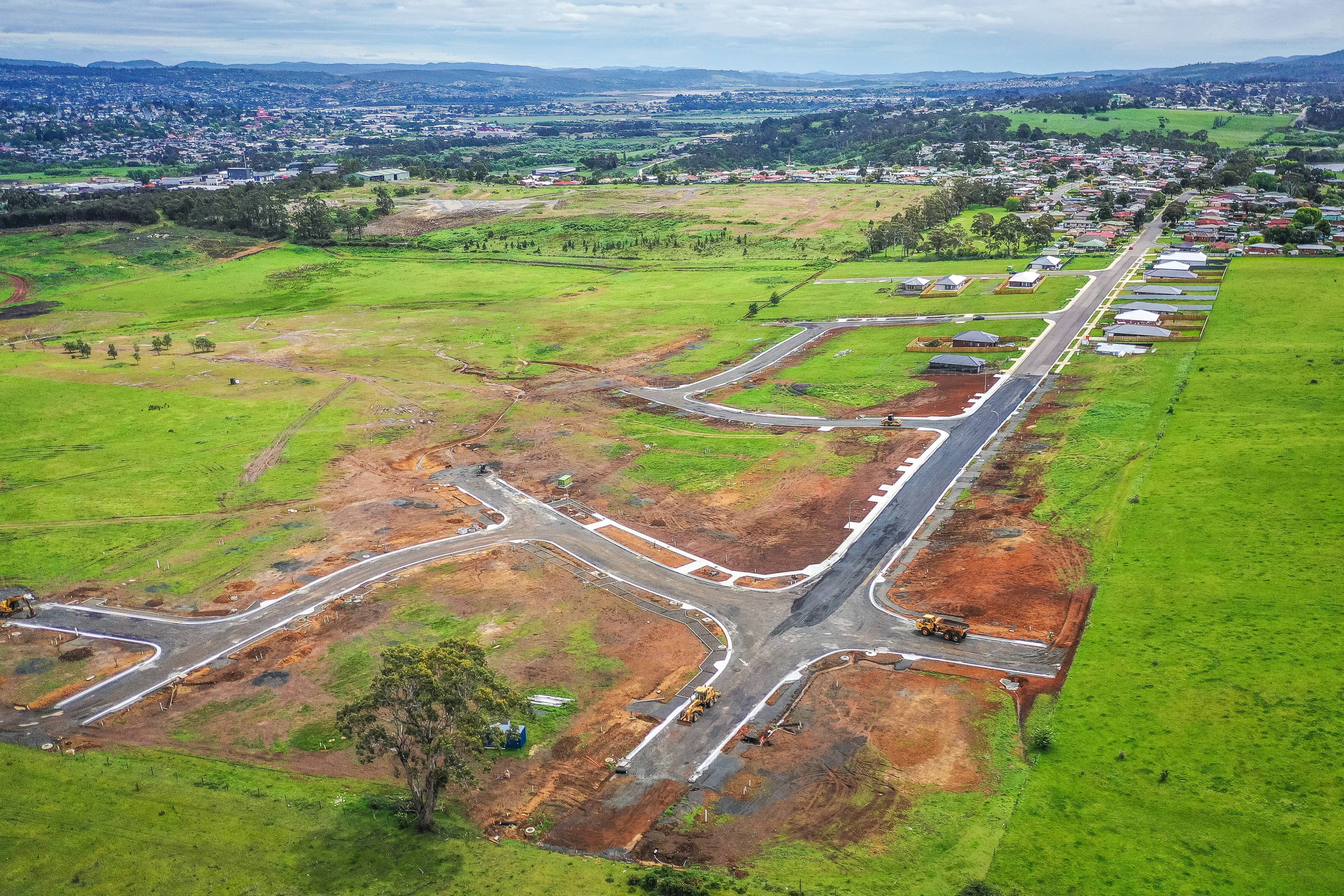
This offers a blank slate to developers, but requires careful planning.
"You need to plan for commercial, social, and recreation infrastructure up front, which is where the structure plan process being used by the city is really good," Mr Purves said.
"It lets them identify those issues up front, identify what some of the service levels might be, start to sort funding arrangements internally within the council, and start to lobby state agencies to provide those facilities, particularly when it comes to health and education."
Mr Purves said there was also the matter of bringing the new homes to market, as if there was no demonstrated demand for a certain type of house in an area banks would be unwilling to finance their construction or purchase - putting developers off.
The plan for Launceston's eastern suburbs revolves around so-called catalyst projects.
These are the necessary rezoning of land to allow more residential development, streetscape plans, and a master plan for the area around Waverley Lake.
The document also lays out plans to develop a new neighbourhood centre, halfway between the existing ones at St Leonards and Waverley, with shops, healthcare and childcare.
A potential secondary school will also be investigated, and the council will lobby the state government for upgrades to key transport infrastructure like roads and buses.
Developers and the council will also handle transport infrastructure to a certain extent - with the specific remits laid out in the neighbourhood plan.
No appetite for risk?
Mr Purves said another option was to redevelop the key transport corridors through Launceston, along Hobart Road and Westbury Road; however that was a big ask.
Private operators often balked at the idea of such projects, as any previously developed site needed work to return it to a developable state.
Mr Purves said government bodies needed to make genuine efforts to engage with the community about what development was needed, and how residents felt it should look.
They also needed to develop more of an appetite to intervene and invest in certain developments, rather than solely relying on mercurial market forces.
"Local governments need to work with the state and federal governments to get funding programs up to help de-risk some exemplar projects," Mr Purves said.
"That way they can demonstrate to the community and to market that these things a) have a market, b) can be a good outcome in the local community, and c) provide a good lifestyle amenity."