

The hidden cost of your 'clean and green' Christmas salmon
Updated 5 days ago
Once a popular choice for many Australians' Christmas Day spread, more and more consumers, and even top chefs are now shunning Tasmanian farmed salmon as awareness spreads about the environmental damage the industry is causing.
The simple truth is, consumer trust in Tasmania's salmon farming industry is collapsing. An industry propped up by government inaction and supermarket complicity is losing its social licence.
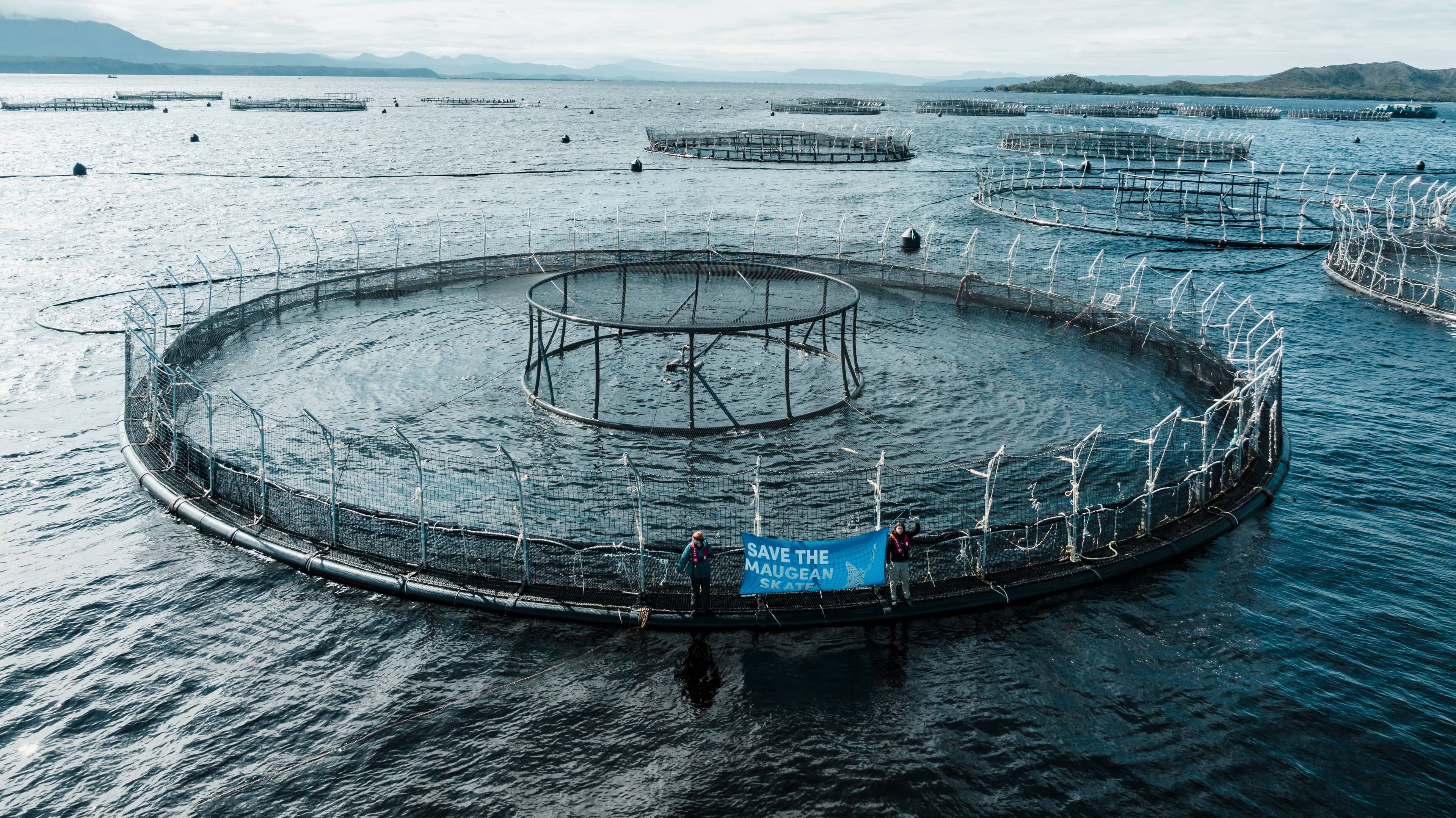
What was once marketed as a "clean, green" product is now increasingly exposed as one of the world's worst-performing aquaculture industries on environmental grounds.
The evidence is piling up. Regular mass fish kills. Extraordinary volumes of antibiotics released into coastal waters.
Government warnings telling recreational fishers to stay kilometres away from farm sites. We are not aware of any other aquaculture industry globally that poses a catastrophic extinction risk to an endangered species.
Tasmanian salmon farming does exactly that, threatening the critically endangered Maugean skate, whose only habitat is Macquarie Harbour, where salmon farming continues despite ongoing public outrage.
Besides a raft of questionable industry practices, the fish they are farming aren't even a sensible fit for Tasmanian waters. Atlantic salmon are cold-water fish from the northern hemisphere, and with Tasmania's ocean temperatures warming at nearly four times the global average, Tasmania is now the warmest place on Earth to industrially farm Atlantic salmon.
Heat-stressed salmon, with weakened immune systems, jam-packed in pens, allow disease to run rampant, leading to mass fish kills and the increased use of antibiotics. This is no longer an occasional failure. It's becoming the norm.
Earlier this year, drone footage revealed dead and diseased salmon processed alongside live fish for consumption, further eroding public confidence. Between January and April, nearly 15,000 tonnes of farmed salmon were killed by an outbreak of the bacteria Piscirickettsia salmonis.
In November, the industry used 700 kilograms of florfenicol to combat another outbreak - more than triple the total antibiotics used across Tasmania the previous year.
Pollution of Tasmanian waters with theantibiotic impacted recreational fishers, prompting the state's public health director, Dr Mark Veitch, to recommend against eating fish caught within three kilometres of salmon pens for 30 days. It went on to shut down parts of the lobster fishing industry at the height of the Christmas season as China refused to import seafood with traces of antibiotic residue.
Ongoing animal welfare issues include a litany of wildlife deaths including seals, cormorants and dolphins, as well as the poor treatment of salmon themselves. The RSPCA no longer certifies Tasmanian farmed salmon.
Yet supermarkets continue to greenwash the product. Coles and Woolworths still sell Tasmanian salmon using flawed certification schemes like Best Aquaculture Practices (BAP) and Global G.A.P., neither of which adequately account for biodiversity loss or damage to a UNESCO World Heritage Area. Public trust is being eroded at the checkout. Coles has taken small steps by removing "responsibly sourced" from its home-brand salmon, but incremental change is not enough.
This crisis demands a fundamental shift. Open-net farming of exotic species in stressed coastal waters is no longer defensible. What is needed is accelerated investment in land-based aquaculture to produce protein at volume and pace.
Australia already farms native seafood species that are better suited to our conditions and show none of the environmental harm seen in Tasmanian salmon farming. This raises the question: why wouldn't supermarkets invest in Australian-farmed barramundi, Murray cod, jade perch, silver perch, marron, yabbies, oysters and mussels? These fish have evolved to thrive in Australian environmental conditions for a long time - they love it - and aren't past their environmental use-by date.
This Christmas, consumers have power, and choosing not to buy Tasmanian farmed salmon sends a clear signal that environmental destruction and extinction risk are unacceptable.