

Parents tearful, exhausted and considering leaving state after ED wait times
Updated 7 hours ago by Lauren Richardson
It took hours for one mother and her two-year-old Lilah to be seen at the Launceston General Hospital (LGH) emergency department, despite paramedics telling her her daughter was dehydrated.
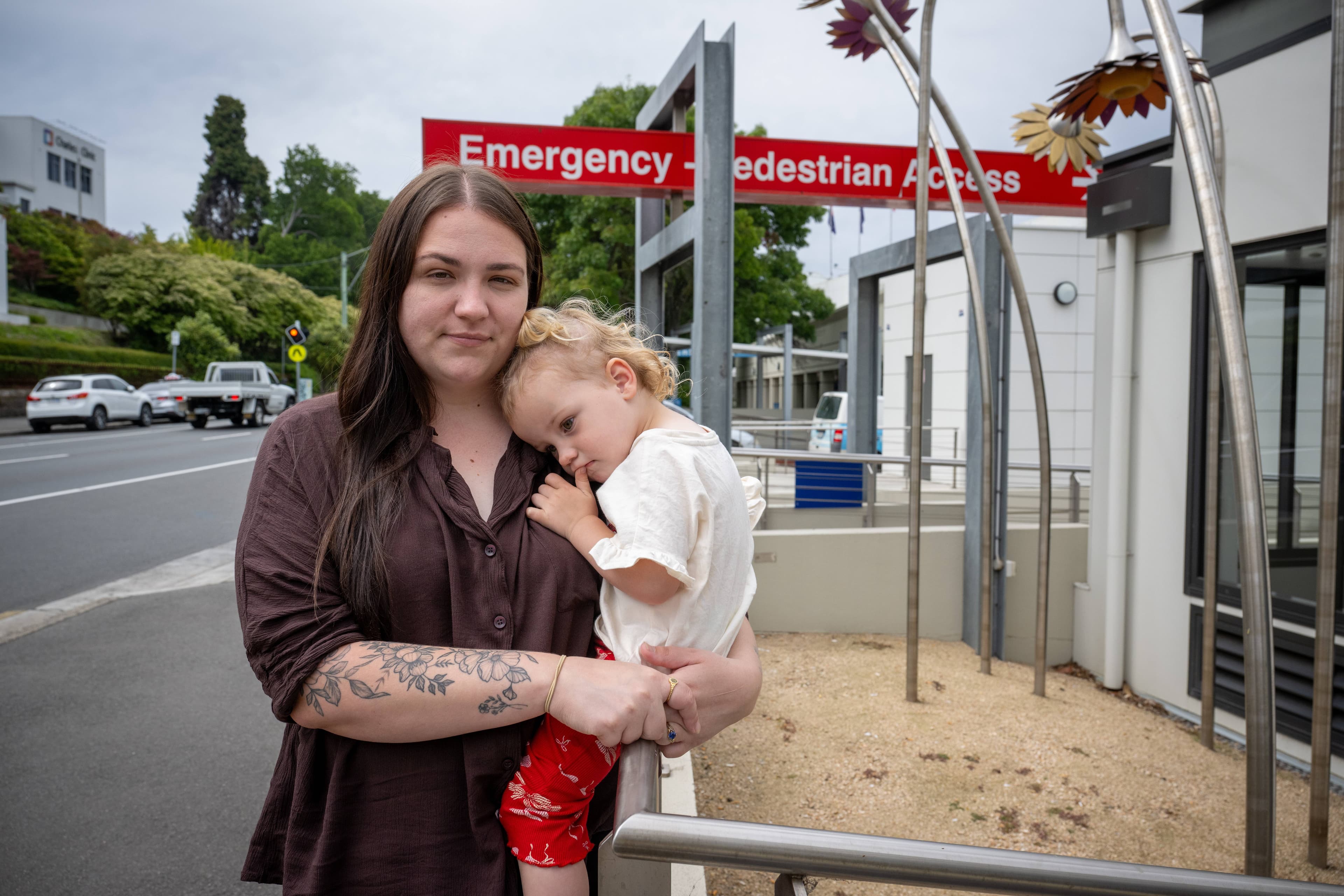
Bree Calder and two-year-old Lilah's experience is not unique.
The length of time Tasmanians are waiting has steadily worsened over the last nine years, with the state tied worst in the country with Western Australia for being seen on time.
When the statistics were released, Health Minister Bridget Archer said the government was planning to deliver an expanded emergency department as part of the Launceston General Hospital Precinct Masterplan.
The expansion would provide an additional 250 beds.
And on December 23 she announced a 20-year preventative health plan draft which has been released for public consultation.
Calling the health plan a 'revolution', the minister said one aim was to keep Tasmanians from ending up in the hospital in the first place.
"We know prevention is better than cure," Ms Archer said.
"And we know this is how we keep Tasmanians well and keep Tasmanians out of hospital."
A Department of Health spokesperson said the LGH was committed to providing the highest standards of care, with patient safety and wellbeing a priority at all times.
"Like other major hospitals in Tasmania, the LGH is experiencing growing demand with an increase in people presenting for care. During 2024-25, there was a 3.4 per cent increase in ED presentations at the LGH compared to 2023-24," the spokesperson said.
"All patients who present to the ED are triaged, with the most urgent clinical need - including those with life-threatening conditions - always prioritised and seen first."
Lilah's story
Ms Calder said she'd taken Lilah to the emergency department on a Wednesday night in late November.
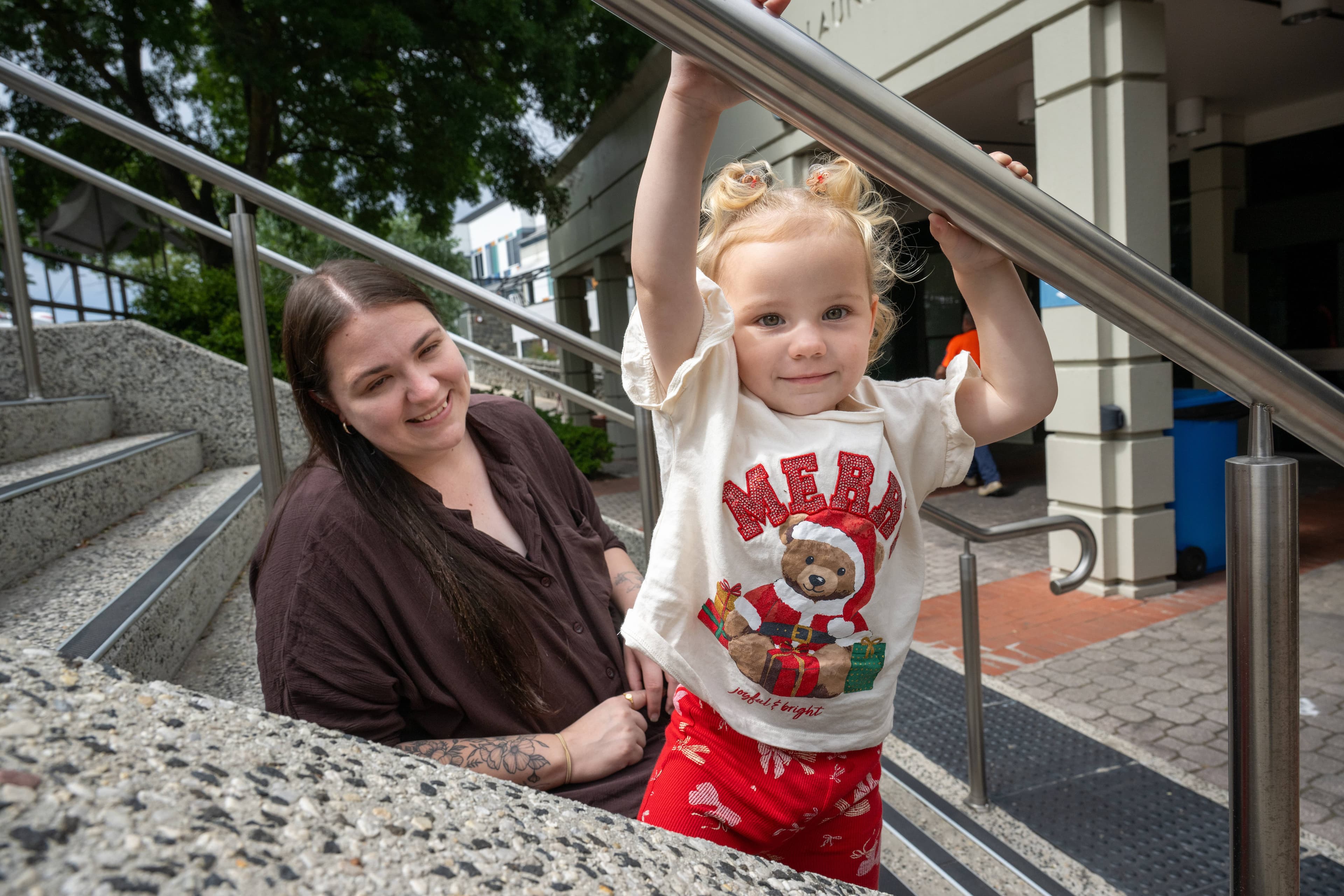
After waiting for about seven hours, she said she was told to "jam juice into her".
"Our main concern was she was dehydrated," Ms Calder said.
"She'd lost about three to four hundred grams in a week, in the lead-up to that visit."
Saturday of the same week, mother and daughter returned to the LGH in an ambulance.
"We used the Care@Home program, who FaceTimed us and looked at Lilah's symptoms, and were really concerned," she said.
"They phoned an ambulance on our behalf."
They arrived at the LGH around 8pm on Saturday, with Ms Calder trying juice, icy poles, anything, to get liquids into her daughter.
Lilah lost another 200g in the preceding 48 hours and hadn't urinated in seven.
"We were there for four and a half hours before I even saw a doctor, and when we saw the doctor we were told to give her Panadol."
The AIHW said from the time the patient arrives, through to when they're seen by healthcare professionals, a patient should be seen within seconds for resuscitation, 10 minutes if deemed an emergency, 30 minutes if urgent, an hour if semi-urgent, and 120 minutes if non-urgent.
Ms Calder was eventually told Lilah had the flu, and that because the emegency department was very full, they might be better off going home.
"It was awful, absolutely awful," she said.
"She was not a well little girl, and needed some help, and we just didn't seem to have that level of care at the hospital."
Ms Calder said part of the issue was how short-staffed and thinly spread the hospital staff were.
"Our hospital system down here isn't as strong as it should be," she said.
"We as a family may need to make a decision on if Tasmania is worth staying here because of the health system."
Not an isolated incident
Mum of another toddler, Kate Marsden, attended the LGH emergency department in June, at about 5:30pm.
She'd been advised to attend by staff at an urgent care clinic concerned for her son.
"Our 18-month-old son had been unwell but on Friday morning was getting worse with persistent fevers, unsettled and off food/drink," she wrote in a letter to Labor parliamentarians.
"Within half an hour of being in ED, we noticed that swelling had started to appear below our son's jawline, it was hot to touch and he cried when you touched it - I immediately updated the triage nurse."
An hour later, they updated staff again.
After three hours in the emergency department, Ms Marsden's son still hadn't been seen.
"We were growing more and more concerned due to the increase in drooling, noisy breathing and general discomfort of our son," she wrote, adding that he is generally the most happy, silly kid who isn't fazed by much.
"Even when he had perforated his eardrum he was still laughing ... so for him to not be eating, drinking or even vaguely interested in what was going on around him was very alarming."
As more time passed, Mrs Marsden said she felt increasingly hopeless to the point of crying.
Around 12:30am she said doctors finally saw her son, assuring her his condition was serious and would be treated accordingly.
"[The doctor] told us that she wasn't comfortable with leaving it any longer without an ENT specialist assessing our son's throat, they immediately called one in," Ms Marsden said.
"By this point we were extremely tearful, exhausted and distressed, but thankfully the doctors and nurses through the waiting room doors were doing their best to reassure us that our son would be taken care of and that we did everything we could to this point.
"By 4am Saturday morning we were in a bed on Wombat Ward, my son was receiving IV fluids, IV antibiotics and IV paracetamol and having regular observations."
The Department of Health spokesperson asked anyone with concerns about their care should to their feedback through the Quality & Patient Safety Unit via phone (1800 008 001) or email (north.feedback@ths.tas.gov.au), so it can be properly investigated.
"We empathise with anyone who experiences longer wait times in the ED," they said.
"The LGH continues to work on strategies to enhance Emergency Department access, reduce ramping, increase bed capacity, and improve admission and discharge processes."